
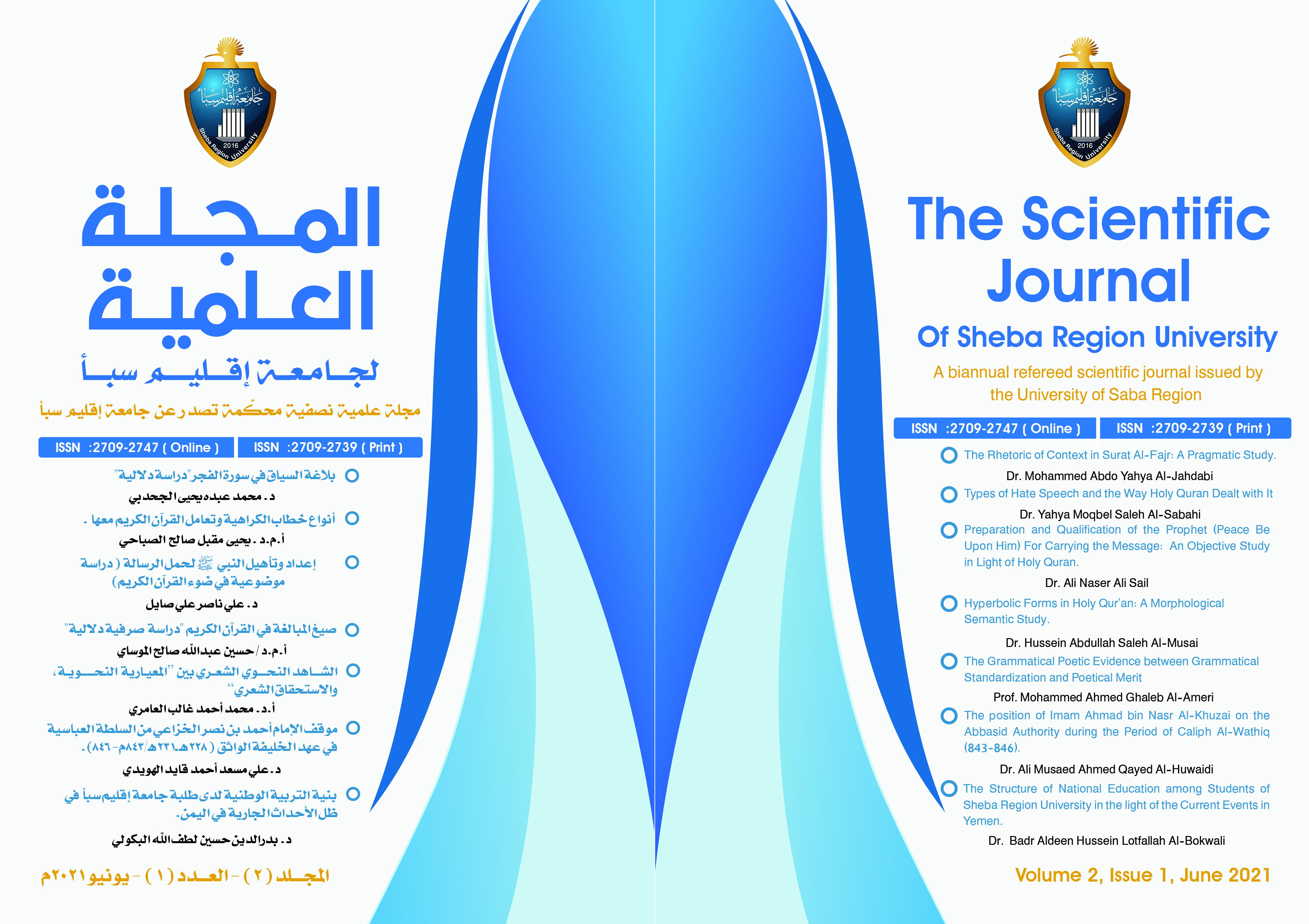
موقف الإمام أحمد بن نصر الخزاعي من السلطة العباسية في عهد الخليفة الواثق ( 228هـ ـــ231هـ/843م- 846)
The position of Imam Ahmad bin Nasr Al-Khuzai on the Abbasid Authority during the Period of Caliph Al-Wathiq (843-846) Dr. Ali Musaed Ahmed Qayed Al-Huwaidi
Keywords:
Al-Khuzai, Abbasid authority, influencing factors, creation of the Quran, الخزاعي, السلطة العباسية؛, العوامل المؤثرة, خلق القرآنAbstract
الحمد لله حق حمده والصلاة والسلام على رسول الله وآله وصحبه أجمعين وبعد:
يرمي هذا البحث إلى دراسة موقف أحمد بن نصر الخزاعي(ت:231هـ/846م) من السلطة العباسية في عهد الواثق(228هـ- 231هـ/843م- 847م)، وبيان العوامل المؤثرة في بناء شخصيته وفكره، الذي جعله يسلك طريق التغيير.
ومن ثم كانت هذه الدراسة توضح جوانب شخصيته، وجهوده في مواجهة الاستبداد السياسي والانحراف العقدي الذي يتغوَّل عن طريق القوة السلطوية، بِدأً من تشكيله جماعة للحسبة في فترة الفراغ السياسي الناجم عن الصراع بين المأمون وأخيه الأمين بقصد التصدَّي للدُّعار والسرَّاق إلى أنَّ تطورت في عهد الواثق بتحولها إلى تنظيم سياسي وفكري، يهدف إلى إنكار المنكرات الفكرية والسياسية، من خلال تغيير نظام الحكم الراعي لتلك المنكرات، وما آلت إليه حركته التغييرية، وقد قُسِّم البحث إلى مبحثين المبحث الأول: عوامل بناء فكر أحمد بن نصر الخزاعي وشخصيته، إذ تطرق للعوامل الاجتماعية، والثقافية، والسياسية التي صاغت فكره، وكونت شخصيته، فيما تناول المبحث الثاني: موقف أحمد بن نصر من سلطة الواثق، وما قام به من معارضة للسلطة، وتأسيسه لحركة معارضة تحمل ذلك الفكر.
وقد أوصلتنا الدراسة إلى عدة استنتاجات أهمها: أنَّ الفكر التغييري لأحمد بن نصر صاغته الظروف السياسية والاجتماعية التي سادت المجتمع منذ بداية القرن الثالث .كما أنَّ ارتكاز الفكر السياسي على الثوابت الدينية يعزز من القناعات لدى المتطلعين للتغيير والمنتمين إليه، الأمر الذي يؤدَّي إلى إحداث التغيير الحقيقي في المجتمع، إذ ماترادف العمل الحسبوي مع المنطلقات الشرعية الصحيحة.
Abstract
This research aims at studying the position of Ahmad bin Nasr Al-Khuzai on the Abbasid authority during the era of Al-Wathiq (843 - 847). It also aims at identifying the factors that affected building Al-Khuzai’s personality and thought, and that made him choose the path of change. This study, therefore, identifies the aspects of his personality as well as his efforts to face political tyranny and ideological deviation that encroached through authoritarian power. He started with forming a group for ‘hisba’ (accountability (promotion of virtue and prevention of vice)) during the political vacuum period resulting from the conflict between Al-Ma’mun and his brother Al-Amin. The aim of forming that group was to encounter prostitution and theft. During Al-Wathiq era, however, that group developed to be a political and intellectual organization which aimed to prevent the intellectual and political vices through changing the government system sponsoring those vices. The study presents the outcome of Al-Khuzai’s change movement as well.
This study is divided into two sections. The first section deals with the social, cultural and political factors that formed Al-Khuzai’s thought and personality. The second section, however, tackles Al-Khuzai’s position on Al-Wathiq’s regime; what he did in opposition to that regime and his forming an opposition movement. The study reaches several conclusions. The most important conclusion is that Al-Khuzai’s thought of change was shaped by the political and social conditions that prevailed since the beginning of the third century. Another conclusion is that a political thought reinforces the beliefs of the people seeking change when it is based on religious constants. That leads to real change if the ‘hisba’ work operates in tandem with the true Islamic principles.
Downloads
Published
How to Cite
Issue
Section
License
Copyright and Licensing
This journal publishes all scientific materials under the Creative Commons Attribution 4.0 International (CC BY 4.0) , license, which grants you the following permissions:
You are free to:
- Share — copy and redistribute the material in any medium or format for any purpose, even commercially.
- Adapt — remix, transform, and build upon the material for any purpose, even commercially.
- The licensor cannot revoke these freedoms as long as you follow the license terms.
Under the following terms:
- Attribution — You must give appropriate credit , provide a link to the license, and indicate if changes were made . You may do so in any reasonable manner, but not in any way that suggests the licensor endorses you or your use.
- No additional restrictions — You may not apply legal terms or technological measures that legally restrict others from doing anything the license permits.
Notices:
You do not have to comply with the license for elements of the material in the public domain or where your use is permitted by an applicable exception or limitation .
No warranties are given. The license may not give you all of the permissions necessary for your intended use. For example, other rights such as publicity, privacy, or moral rights may limit how you use the material.